
About
Stress affects many areas of life—including mood and sexuality. Sex hormones, such as estrogen and progesterone, also impact how we experience stress.
Within our research focus, “Stress, Sex & Hormones,” we examine the interactions between stress and hormonal changes across the reproductive female life course, as well as how stress shapes sexual experience and behavior.
Methods
In our research, we adopt an innovative "from lab to life" approach in our investigation of stress. We adopt Ecological Momentary Assessments (EMA) in the participants' everyday lives as well as laboratory-based stress tests. Furthermore, we utilize biological markers of stress, including salivary cortisol and alpha-amylase levels, as well as heart rate measurements, to complement our assessments.
This comprehensive methodology allows us to capture real-time data on stress responses and experiences, providing valuable insights into the dynamic interplay between stress, sex and hormones. By bridging the gap between controlled laboratory settings and real-world contexts, we aim to advance our understanding of stress in the context of female reproductive health.
Current Projects
Stress & PMS
ISSAC – Interactions in Stress and Premenstrual Symptoms across the Menstrual Cycle
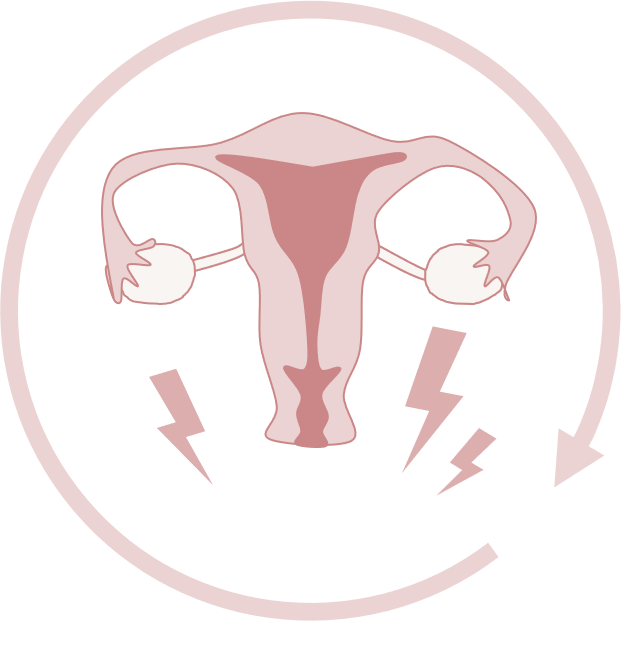
ISSAC – Interactions in Stress and Premenstrual Symptoms across the Menstrual Cycle
Hormonal fluctuations in the second half of the menstrual cycle can be associated with affective, behavioral and physical symptoms known as premenstrual syndrome (PMS). Premenstrual dysphoric disorder (PMDD), a particularly severe form of PMS, has been recognized as a mental disorder since 2013 and is estimated to affect around 58,000 to 150,000 Austrians. It is characterized by emotional symptoms such as depressive moods, mood swings, irritability and tension.
Stress has been identified as a significant risk factor for PMDD and has been repeatedly linked to the development, worsening and maintenance of symptoms. However, the underlying psychobiological dynamics and time course remain largely unexplained.
By collecting daily psychological and biological stress markers and PMDD symptoms throughout the menstrual cycle, we aim to better understand the underlying dynamics and subsequently use the findings to help improve the quality of life of those affected.
Contact Celine Bencker to find out more about this project.
We will be looking for participants again starting in January 2026!
If you are interested in participating, please fill out our screening questionnaire (duration: ca. 5-10min).
Please note that the study is in German and participation is only possible with sufficient knowledge of German.
Stress & hormonal contraceptives
HoCoS – Hormonal Contraceptives and Stress
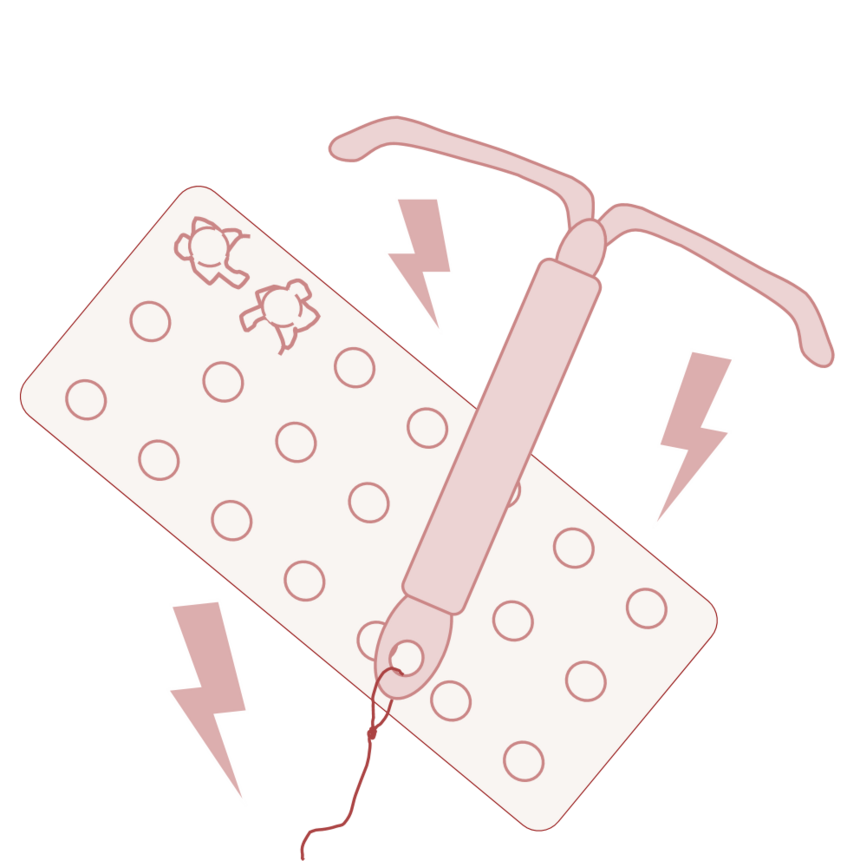
HoCoS – Hormonal Contraceptives and Stress
Studies show that taking hormonal contraceptives can have an impact on the stress system and, for example, increase cortisol levels. In the HoCoS study, we are investigating how different hormonal contraceptives (e.g. the pill, hormonal IUD, vaginal ring) influence stress experiences and stress reactivity. We want to find out how different hormone preparations modulate the biological stress response and the subjective perception of stress. In addition to gaining a better understanding of the interplay of exogenous and endogenous sex hormones with stress and mood, our aim is to inform clinical practice and support women in making informed contraceptive decisions.
This project is currently still in the preparation phase. Expected start: 2026.
Contact Laura Bäuerl to find out more about this project.
Past Projects
Sexual experience and behaviour in everyday life: Ecological Momentary Assessment with biomarkers
The aim of this study was to research stress and sexuality in everyday life and, in particular, to investigate the influence of stress on sexual experience (fantasies, desire and arousal). We investigated the relationship between stress and sexual experience and behavior in everyday life, how stable this relationship is and whether it differs depending on sex and gender. We also looked into whether there are certain moderators, such as risk or protective factors, that influence the relationship.
Head of study: Prof. Dr. Urs M. Nater, Head of experiment: Hanna Mües, MSc
Publications
Meta-analysis on stress, trauma, and premenstrual symptoms
How are stress and premenstrual symptoms connected? And are those with a trauma history more likely to have PMS or PMDD?
In our systematic review and three meta-analyses we combined evidence from 66 studies to exlore these questions.
What did we find?
Our review points to a relevant association between stress and premenstrual symptomatology:
- Higher stress levels are linked to more severe symptoms.
- In individuals with PMS/PMDD, stress levels increase during the luteal phase
- Trauma history associated with more than double the odds of PMS/PMDD
Details can be found in our publication in the British Journal of Psychiatry:
Bencker, C., Tran, U. S., Roth, L. H. O., Nayman, S., & Nater, U. M. (2025). Associations between premenstrual symptoms and (traumatic) stress: A systematic review and three multilevel meta-analyses. The British Journal of Psychiatry, 1–11. https://doi.org/10.1192/bjp.2025.10311
Effects of progestagens on mood, stress, and cognition
How do progestogens affect mood, stress, and cognition in females?
Our review highlights how progesterone and synthetic progestagens affect the brain, mood, and stress experience. The most important findings are:
- Progesterone receptors are widespread in the brain
- Stress response systems may drive adverse reactions to progestagens
- Selective progesterone receptor modulation can alleviate premenstrual mood symptoms by stabilizing cycle-related progesterone fluctuations
- Progestagens offer neuroprotective benefits in Alzheimer's disease, traumatic brain injury, and stroke, and hold potential for targeted therapies.
Important takeaway: More research is needed to separate the effects of progestagens from those of estrogens
Learn more in our publication in Frontiers in Neuroendocrinology:
Bencker, C., Gschwandtner, L., Nayman, S., Grikšienė, R., Nguyen, B., Nater, U. M., Guennoun, R., Sundström-Poromaa, I., Pletzer, B., Bixo, M., & Comasco, E. (2025). Progestagens and progesterone receptor modulation: Effects on the brain, mood, stress, and cognition in females. Frontiers in Neuroendocrinology, 76, 101160. https://doi.org/10.1016/j.yfrne.2024.101160
Too stressed for sex? Associations between stress and sex in daily life.
Mües, H. M., Markert, C., Feneberg, A. C., & Nater, U. M. (2025a). Bidirectional associations between daily subjective stress and sexual desire, arousal, and activity in healthy men and women. Annals of Behavioral Medicine: A Publication of the Society of Behavioral Medicine, 59(1), kaaf007. https://doi.org/10.1093/abm/kaaf007
Mües, H. M., Markert, C., Feneberg, A. C., & Nater, U. M. (2025b). Too stressed for sex? Associations between stress and sex in daily life. Psychoneuroendocrinology, 181, 107583. https://doi.org/10.1016/j.psyneuen.2025.107583
Team

Univ.-Prof. Urs M. Nater
Urs Nater is head of the Institute of Clinical and Health Psychology and of the Research Platform The Stress of Life (SOLE) - Processes and Mechanism underlying Everyday Life Stress.
Celine Bencker, MSc

Celine Bencker, MSc
Celine Bencker is a psychologist whose dissertation examines the psychobiological dynamics between stress and premenstrual symptoms across the menstrual cycle. She is supported by a DOC Fellowship from the Austrian Academy of Sciences (ÖAW) for her dissertation project, which includes the ISSAC study.
E-Mail: celine.bencker@univie.ac.at
Bluesky: @celinebencker.bsky.social
Nida Ali, PhD

Nida Ali, PhD
Nida Ali is a clinical and health psychologist interested in understanding the pathway from stress to disease. She investigates the interactions among the biological (neuroendocrine, autonomic, and immune systems) and psychological (cognitive, emotional) processes that are involved during stress, and their links to health and disease in men and women.
Together with her team, Nida recently completed data collection for a daily life study investigating how person- and context-dependent factors influence the alpha-amylase awakening response (AAR), to determine its viability as a biomarker of health and disease. She is currently developing a grant for the Austrian Science Fund, investigating the links between stress and fertility in couples who are trying to conceive.
E-Mail: nida.ali@univie.ac.at
Laura Gschwandtner, MSc

Laura Gschwandtner, MSc
Laura Bäuerl (Gschwandtner) is a cognitive scientist with her main research focus on stress-related disorders. She is currently planning the HoCoS project, which is investigating how various hormonal contraceptives, such as the pill or the hormonal coil, affect the stress experience and biological stress markers.
E-Mail: laura.baeuerl@univie.ac.at
Current and Past Master's Students
Graduated:
"The Temporal Association Between Self-reported Sleep Quality and the Severity of Affective Premenstrual Symptoms during the Perimenstrual Phase" (Carlotta Petrusch, 2025)
"Maladaptive Substance Use across the Menstrual Cycle" (Lea Maria Beinbauer, 2025)
"Mood Instability Across the Menstrual Cycle: Does Premenstrual Symptom Severity Matter?"(Laura Stasch, 2025)
Work in progress:
"Exploring the Relationship Between Perceived Stress and Physical Symptoms during Menstruation"(Nicola Notz)
"The influence of trauma on the relationship between perceived stress and premenstrual symptoms" (Zoe Kiesler)
"The influence of expressive emotion suppression on the association between daily stress and premenstrual affective symptoms" (Chiara Hitchcock)